Knicks
Go HomeWhen I think about the Knicks I think about the white leather couch at my parents' house. It is all scratched up now by our cat Iggy, but when I used to sit on the edge of it and dig my toes into the old brown furry rug it was in better condition. The best games were at 7 o'clock on Friday, Friday Night Knicks on MSG, but weeknight games well after 9 and 10 were just as exciting. I would come down from my bedroom in a Stoudemire t-shirt, faded and snug, or in later years the far softer, baggier Porzingis one, or the white RJ Barrett one, and scramble back and forth between the couch and dinner table. Sometimes in the effort to be good members of the family my dad and I would sit upright and mute the volume, looking down at our plates respectfully. Then his eyes would wander to the window of the living room, in which you could see the reflection of the television. And he would squirm in his seat when he saw the opponent hit a three, or get a steal, or any of the million other embarrassments we were invariably accustomed to as fans of those teams.
I think about the theme song for the Knicks on Fridays, those blaring horn sounds that meant everything else in the world was over and you were in for two and a half hours of madness. I remember shaking and baking, bounding and astounding, precocious neophytes, the years and years and years of disappointing neophytes that you held onto for the precious glimpses of potential, the what-ifs and the maybes and the flashes. I remember Pablo Prigioni, whom I met once at the Barnes and Noble that I'd sit and read in for hours, slipping silently into the opposing backcourt to poke a pass out of the opponent's inattentive point guard. Alvarado reminded me of him this postseason.
I remember the size of Madison Square Garden, the first time I ever went, passing through metal detectors into unimaginable brightness, surrounded by posters of the players I worshiped and orange foam #1 hands and maybe the most expensive hamburger ever and then the hardwood of the world's most beautiful arena. And, inevitably, the heartbreak of a game winner that DeMar DeRozan hit against us. With seconds on the clock. One of hundreds (millions, in my eyes) of inevitable and self-inflicted losses.
Over time, the Knicks became a sort of amulet for me. They were the proof point of my blind faith, the cause of my suffering, bearers of the power of possibility. Undeserving beacons of potential. I don't know if I ever stopped to consider if it was possible to win a championship because it was not even a question for me.
With this team, I only felt one word: hope.
Hope is the thing with feathers. Hope is suffering bubble-wrapped. Hope is Frank Ntilikina, Alonzo Trier, Jeremy Lin, November-through-January Kristaps Porzingis. You name it. If you were on the court, we believed in you. No matter how terrible. How many late-game turnovers, missed open threes, broken jump shots, dumb fouls. We thought Kevin Knox could become something. We thought Durant would consider us (and Lebron before him). We thought David Fizdale could save us.
Just kidding. He sucked. Take that for data.
At some point, this cycle became a problem. The masochism of being a Knicks fan was its own medication. You had to juggle the expectation of losing, day in and day out, with the idea that maybe some of this would amount to something. I stuck with it, but bitterly, hatefully. There was a sort of sickening pride in being the laughingstock of the league. Part of it was the dream of proving everybody wrong, but there was a deeper problem: I became enamored with losing. I wore losses like a badge of honor. It was like my fandom was more meaningful because we were so terrible. Nobody cared about this garbage, and that made it worth something for me.
Winning a championship requires rewiring this sort of thinking. The Knicks were terrible because they had become addicted to losing, and the rest of us with them. Hope alone is nothing. It is faith and grit together that define New York; that define winning; that make you a champion.
The arrival of Thibs was the first change; the culmination was Jalen Brunson.
Thibodeau was the first to make it seem truly possible. His coaching was interested in one thing only: winning. He was like Churchill: win at all costs, win by any means, win because your life depends on it. Win now. Winning is more fun than fun is fun. I'd like to say I knew that he couldn't take us to the promised land, but the truth is I really thought he could. He taught the team that they could beat anyone in the NBA on any given night, by being better prepared, better strategized, better practiced. He taught them to fight for every possession. To take care of the basketball. To outwork your opponents on every rebound, even forty eight minutes into a game in which you've played all forty eight minutes. He taught the team that if you did not contribute to winning, whether you were a rookie on a heater or a ten year vet, you would not see the court when it mattered. Most importantly, he taught them sacrifice. Unlike nearly every other year of Knicks history I had experienced, Tom Thibodeau showed that there was no pride in losing. Being a New Yorker is giving everything you’ve ever been capable of to win. It’s grit.
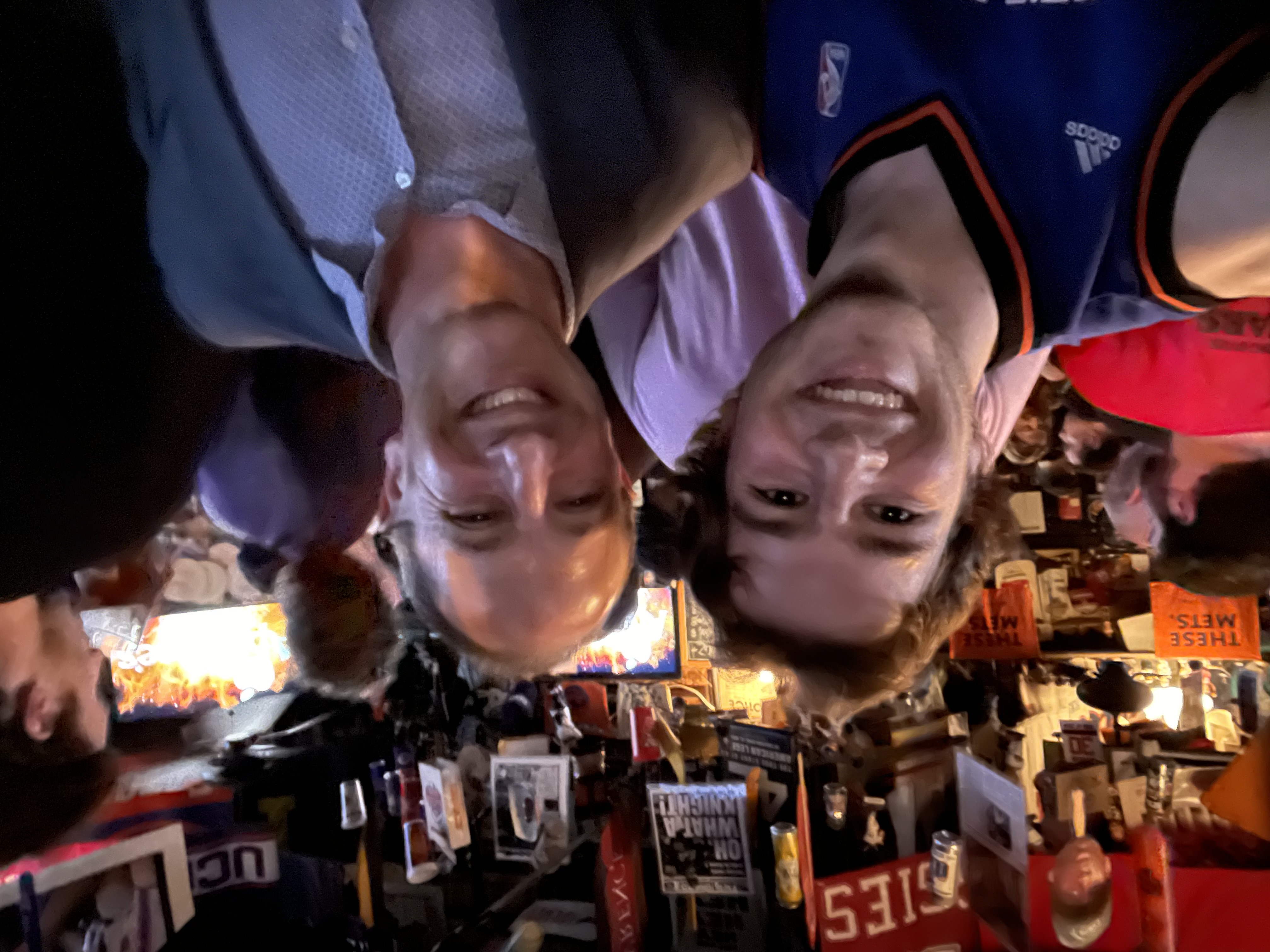
I watched Thibs games wherever I could. On whiteboards in college classrooms, on my phone on the streets of the city, bars, the suffering white leather couch at home whenever I was back there. I remember cramming with my dad into a sports bar in the East Village to see us take down Cleveland in one of the most important playoff games of my lifetime. I was wearing a Shumpert jersey seven sizes too small on me, he'd come from work in his slacks and button-down, and we were sweating like dogs on every possession. Boy, had we suffered. Even when we knew it was possible, we paid for it. And right when we were closest came the injuries. It didn’t make sense to me, that even with the sacrifice, and the addiction to winning, and the mother-fucking hard-nosed suffocating defense, we weren’t good enough. We were tired, hurt, broken, shoddy.
But then came the apotheosis.
When we brought in Rick Brunson as an assistant coach I could barely stifle laughter. We backdoored this guy’s dad just to sign a free agent? We were bringing in his college teammates? It was unbelievable. A 6’2 point guard. I had nightmares about Emmanuel Mudiay and Dennis Smith Jr. But this guy had something no Knick had had in a very long time. He had a chip on his weirdly hairy shoulder. He was fueled by doubt. He was (physically, it seemed) emboldened by hatred. He had the same addiction Thibs did to winning, and the same workhorse intensity to every possession, and the method to make basketball magic, and the balls to be the leader of a team. To rise to every single occasion, to lead the league in charges drawn, to use his shoulder like a battering ram to get to the basket at will. His hard work and his desire vindicated my faith. He was the proof behind the promise. And he was a 6’2 point guard! Sometimes the lack of passion in America depresses me as an Argentinian, but Jalen Brunson and his teammates played every game like it was the last one of their lives. Like they loved basketball more than anything. Like they believed in themselves because they had labored for it.
The change was palpable. In New York you don’t just get respect, you demand it. You outwork everyone. You have the confidence in your ability to write history out of nothing other than faith in you. If I want to cry I’ll put on the video Patrick Ewing narrated for Brunson when he was named captain. Jalen Brunson. Born to play basketball.
After game 5 I called my dad, who’d been watching from the airport. Between our tears I understood basically nothing except for this: “You never think the suffering is worth it, until it is.”
I feel for Clyde Frazier, who has given fifty years to this team, and still has the same joy he did when he was on the court. I feel for Mike Breen, who guided thousands of us through misery with an unimaginable faith in the beauty of basketball, good and terrible. He made Sasha Vujacic (VOO-YA-CHITCH) threes feel like magic.
I feel for Jonathan Macri, whose Knicks newsletter brightened my morning commute and whose madness for this team was infectious.
I’m thankful for my siblings, who jumped into this suffering knowing full well it could have ended nowhere. And my mom, who withstood years of my dad’s stultifying screaming at the living room television.
Papi, you showed me what it means to have passion. You exemplified faith and grit. You cannot have one without the other.
These Knicks demonstrated what it means to be a champion. You have to be addicted to winning. You have to dive for every loose ball, leap for every rebound, pick up your teammates after their inexplicable brain farts, you have to love winning, you have to believe you’re a champion, and you have to work harder than anybody else to prove that you deserve it because you know damn well you deserve it.
And, like George Michael says, you gotta have faith.